

Why Physical Therapy is Crucial After
a Total Shoulder Replacement
— June 2026 Newsletter —
Are you scheduled for a total shoulder replacement? While your surgeon has likely reviewed what you can expect from the procedure itself, you may have some questions about the rehabilitation afterward. Never fear: the Aspen Rehab physical therapists are here to guide you through the entire process with a little help from one of our former patients.
Meet The Patient (And the Surgery)
When Michael (not his real name) suffered a severe shoulder fracture, he knew he was going to need medical intervention to take care of it. He didn’t realize he was going to require a whole new shoulder!
Michael’s case was a little unusual because he was younger–in his mid-40s–and active. Most recipients of a total joint replacement, including shoulder replacement, opt for surgery to manage osteoarthritis pain. But these types of surgeries can also be performed when an injury is severe enough, as was the case with Michael, who fell on his shoulder during a particularly vigorous game of flag football.
No matter the reason for a total shoulder replacement, the basic procedure is the same: a surgeon replaces the shoulder joint’s ball and socket parts with prostheses. Because this is a major surgery, physical therapy is crucial in helping you rebuild your shoulder’s strength and function.
The Early Days of Recovery
Michael’s surgery was successful, but his release from the hospital was just the beginning.
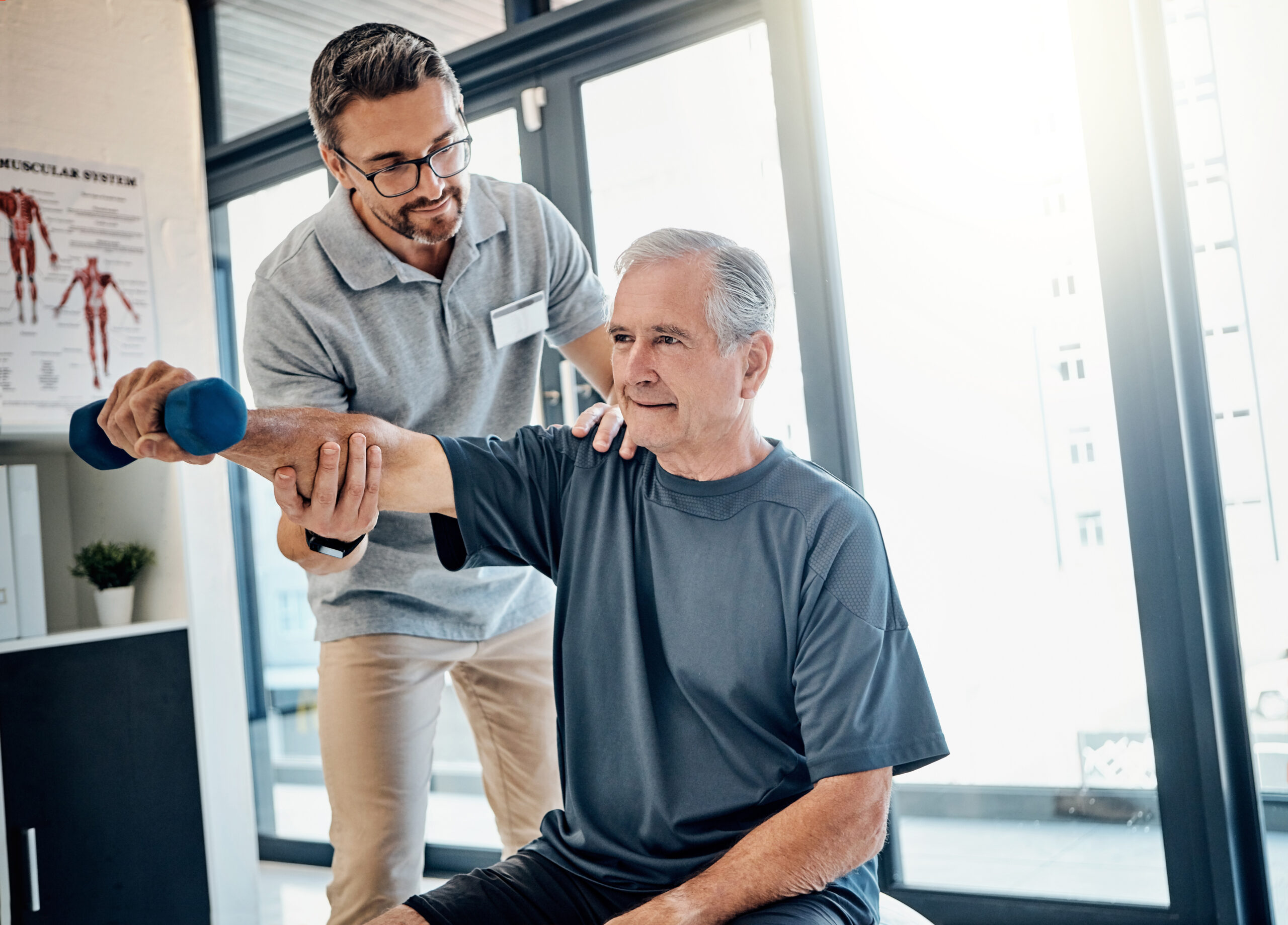
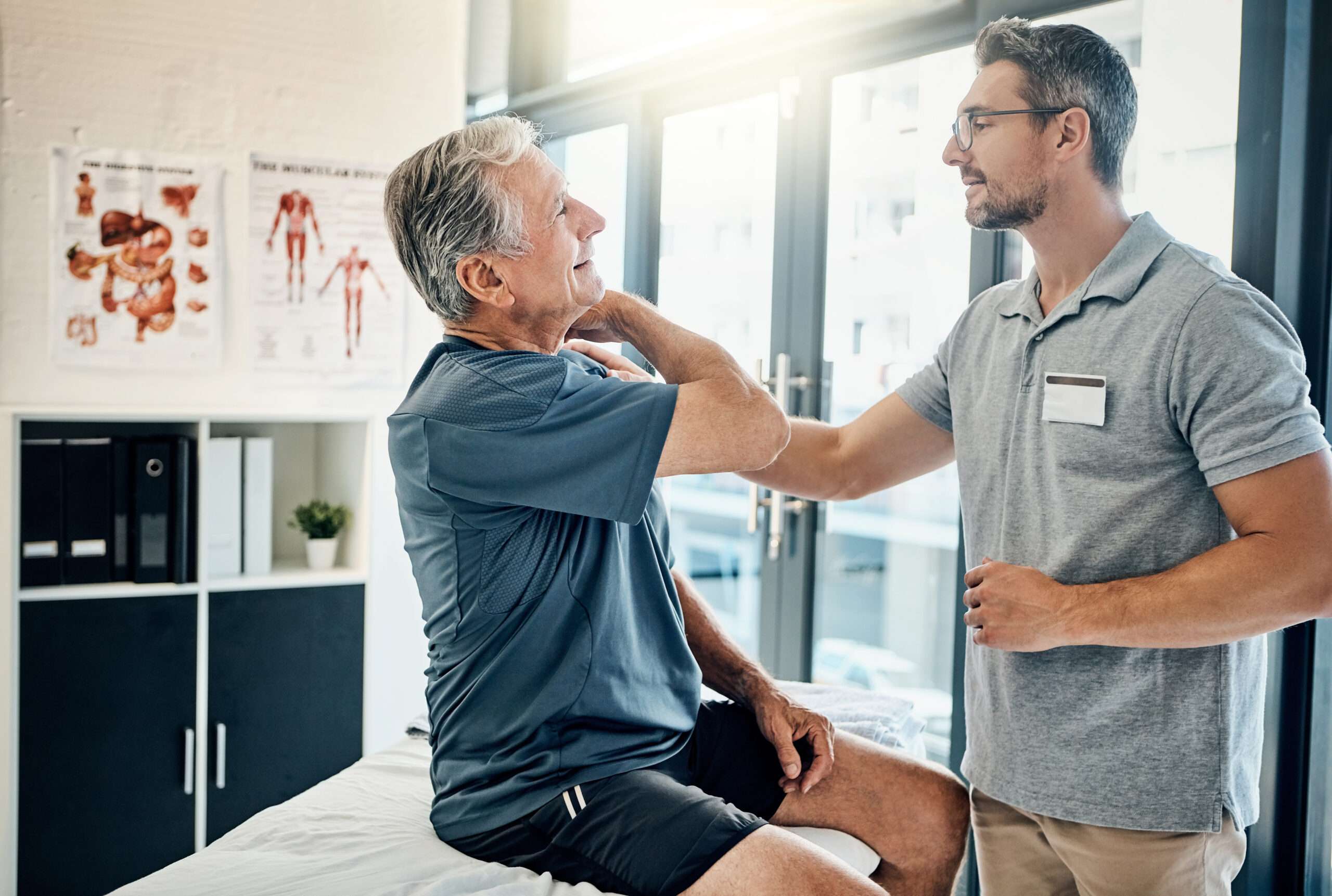
He began working on his physical therapy within the first days of release. At that point, his shoulder was still in a sling, so one thing his therapist helped him with was completing daily tasks, such as dressing and self-care.
However, it was also important for Michael to begin mobilizing his arm as soon as possible. Why? Because moving the joint facilitates healing and helps prevent the formation of scar tissue, which can lead to chronic pain and mobility issues down the line. We showed him simple exercises to jumpstart rehabilitation as the surgical site healed.
Restoring Mobility and Strength
After a few weeks, it was time for Michael to begin rehabilitating his shoulder in earnest. He no longer needed to use the sling by this point, but his shoulder was still very weak and stiff.
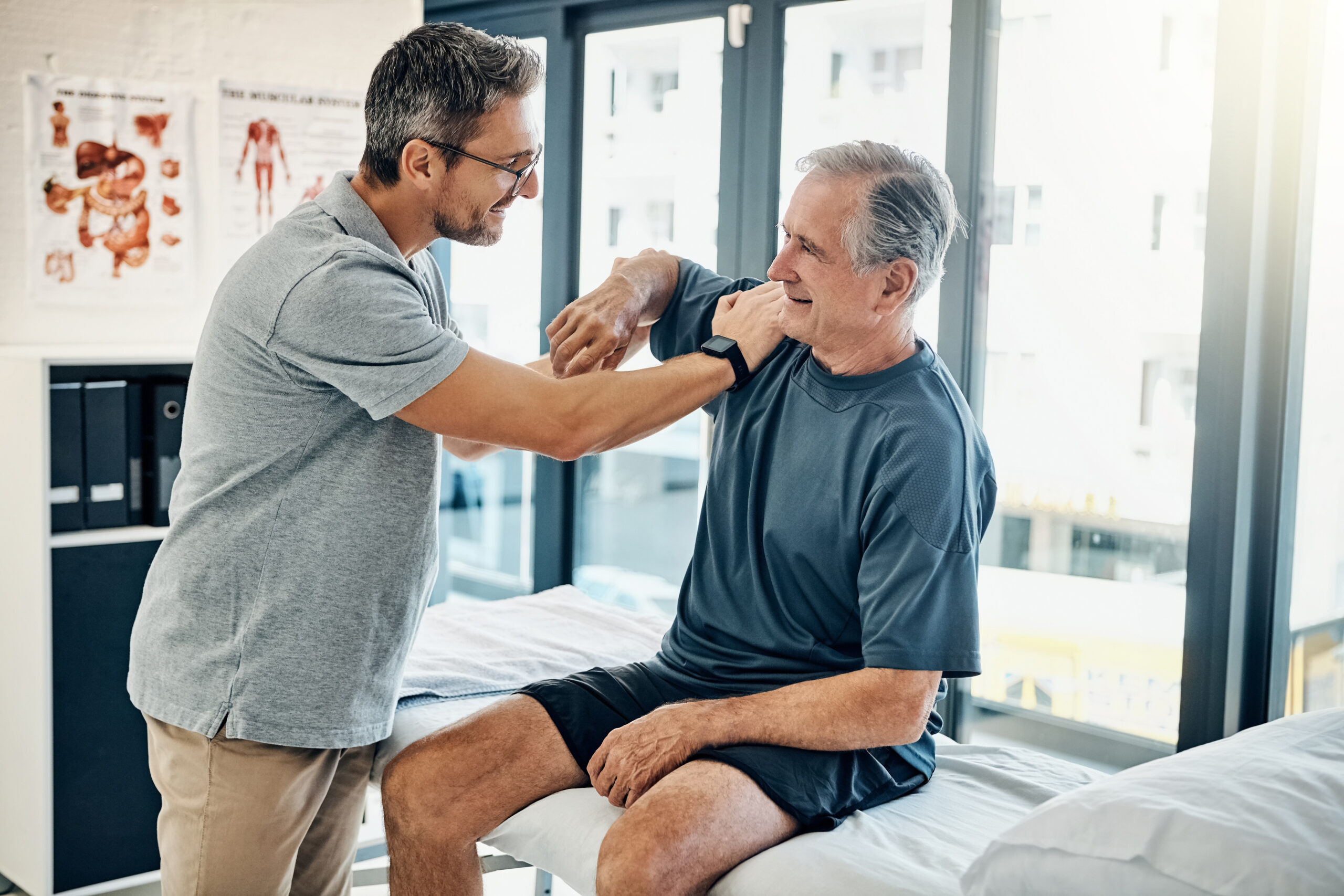
During his rehab session, we began with a round of manual therapy, using hands-on techniques to help reduce Michael’s pain, improve his restricted range of motion, and promote blood circulation to the area. This also helped prepare Michael’s shoulder for his prescribed exercises.
Initially, we focused on improving the mobility in Michael’s shoulder. We guided him through simple exercises that slowly restored his range of motion so that he could use his new shoulder just as well as his original.
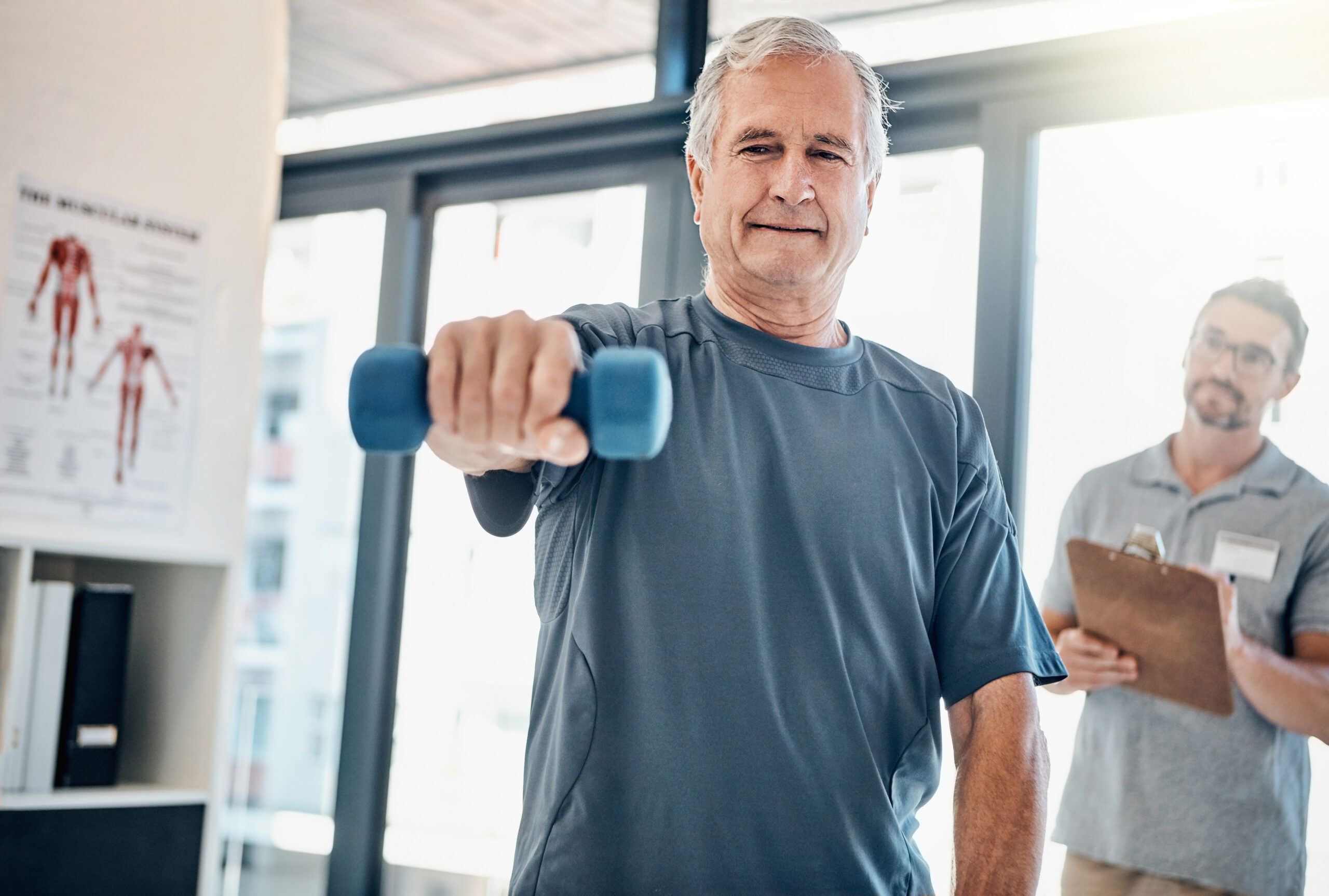
As his mobility improved and pain decreased, we began incorporating strengthening exercises into Michael’s rehabilitation. The muscles surrounding his shoulder were weakened both from his injury and the surgery itself, and he needed to restore that strength to regain function.
We started slowly, gradually increasing the resistance in Michael’s exercises as he improved.
Finding Functionality
After several weeks, Michael was no longer dealing with persistent pain or restricted mobility. He was also well on his way to returning his shoulder’s strength to where it had been before his injury.
At that point, we began working on Michael’s functionality. As mentioned, Michael was an active individual, which meant he had some specific rehabilitation goals.
To help him achieve those goals, we retrained him on shoulder movements that were most important to him. We also helped him relearn shoulder movements that were significant in his day-to-day life, such as reaching overhead to grab something off a high shelf.
We also provided Michael with a detailed return-to-activity schedule, letting him know which shoulder movements he could safely perform and which would require modification as he continued through rehab.
Another Successful Rehabilitation
Michael’s post-surgical rehabilitation took a total of seven months, which is actually on the shorter end for someone recovering from a total shoulder replacement. But because Michael dedicated himself to post-surgical physical therapy, he saw swift results.
Do you want to learn more about the critical role of physical therapy after a total shoulder replacement? Call Aspen Rehab today to schedule an appointment!
Call us today to schedule an appointment!
Sources: https://orthoinfo.aaos.org/en/treatment/shoulder-joint-replacement, https://www.choosept.com/guide/physical-therapy-guide-total-shoulder-arthroplasty-replacement
Patient
Success Story
“I just completed 3 months of therapy for a hip replacement. My goal was to get back on skates, and the staff worked tirelessly to ensure my goals were met. The staff was great, always had a smile, and made you feel comfortable. My scheduled appointments were on time, every time. I would recommend Aspen to anybody needing a great physical therapy clinic.”
— Mike C.
We Want To Hear Your Success Story!
Click below to tell your PT story and leave your review. We look forward to hearing from you!
Tim Weyant, Physical Therapist | Aspen Rehab Director

Understanding the Four Phases of Recovery
If you’re about to undergo a total shoulder replacement–or another orthopedic surgery–then it’s essential you understand the four phases of recovery. It takes time for your body to recover after surgery, and it doesn’t all happen at once.
The Aspen Rehab physical therapists are here to guide you through your recovery and rehabilitation, helping you to return to the activities you love as quickly as possible. Still, you don’t want to rush things. Your body is going through a complex process as you make your recovery:
- The Acute Phase (One Week After) This phase focuses on healing at the surgical site. During this time, your efforts will go toward managing pain, reducing swelling, and starting gentle range of motion exercises.
- The Mobility Phase (Two to Four Weeks After): Your body’s still healing from the surgery. However, you’re well enough to begin working on mobilization exercises to help prevent scar tissue formation (and potential movement restrictions).
- The Strengthening Phase (Four To Seven Weeks After): At this point, the site has largely healed, and you begin really working on rehabilitation exercises focused on improving mobility, range of motion, and strength.
- The Functionality Phase (Eight Weeks After): At this point, you’ll focus on restoring lost strength and function, ensuring you can return to your everyday life as good as new!

.
Feel Better by Eating Better!
Mandarin Breakfast Smoothie
This mandarin breakfast smoothie is a creamsicle dream brimming with Vitamin C, and plenty of good-for-you ingredients to kickstart your morning!
Ingredients
- 1 ½ cups milk, dairy or dairy-free
- 1 cup yogurt, dairy or dairy-free
- 4 mandarin oranges, peeled
- 1 frozen banana
- 2 tablespoons ground flaxseeds
- 1 teaspoon vanilla extract
Add all of the ingredients to a high powered blender, and blend until smooth.
Exercise of the Month
Shoulder Extension Side Lying
(Shoulders)
Lie on your side with a pillow supporting your head. Put a towel under your elbow with your arm bent. Rotate your arm up. Pause briefly, then return to the starting position. 3 Sets, 10 Reps (each arm). (Materials needed: floor mat, lightweight)
Team Spotlight

Tim Weyant
Physical Therapist
Executive Director/ Owner

Vesna Radivojevic
Physical Therapist Assistant

Erika Davila
Marketing Director/ Computer Technology

Andrea Weyant
Chief Operating Officer
Kimberley Friedmann
Physical Therapist Assistant
Let’s Get You Better ASAP!
Don’t let pain dictate your life. Take the first step towards reclaiming your mobility and well-being with our expert support. Start your journey to a healthier you today.