

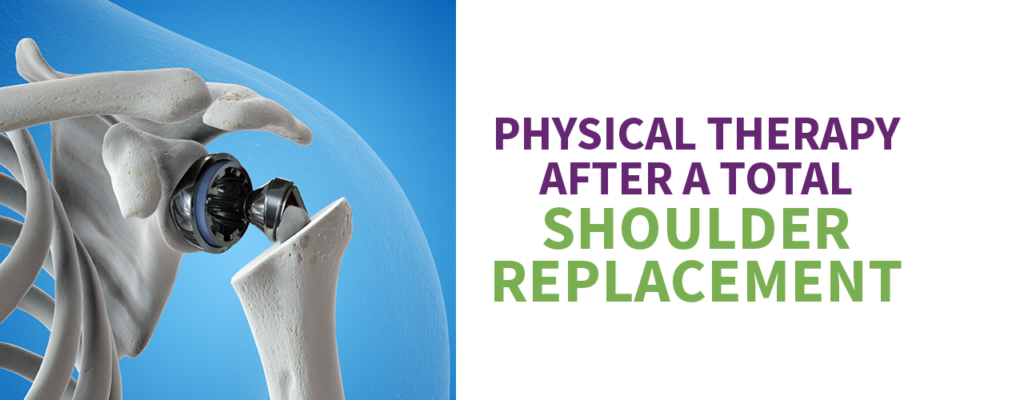
Do you suffer from pain in your shoulder? Have you been told you have severe arthritis and need a shoulder replacement? Total shoulder replacement (i.e., total shoulder arthroplasty, or TSA) is a surgical procedure to replace part or all of the shoulder joint.
After a total shoulder replacement, it can be challenging to perform daily activities. Fortunately, at Aspen Rehab, our physical therapist can help guide you through rehabilitation after surgery so you can get back to your everyday life as quickly as possible.
Shoulder replacements are a standard procedure that many people undergo, especially those suffering from arthritic pain or severely damaged rotator cuff muscles in the shoulder joint. Although they are less common than a knee or hip replacement, according to the APTA, around 65,000 people have shoulder arthroplasties in the U.S. each year.
If you have recently had a total shoulder replacement procedure, or you have one planned in the near future, contact Aspen Rehab today to find out more about how we can help you achieve relief and recovery.

How Physical Therapy Can Help
To ensure the best results following shoulder replacement surgery, it would be in your best interest to participate in both “pre-hab” physical therapy (therapy before surgery) and post-op physical therapy.
The more you prepare before your procedure, the better your recovery. Our therapists can provide you with exercises to ensure you go into surgery with the healthiest shoulder possible.
Your physical therapist will create a customized program for you. This may include strengthening of the shoulder, neck, and back muscles. Mobility exercises and posture training may also be part of your pre-surgery program. We will also educate you about what to expect after surgery to prepare you for the procedure.
Preparing before surgery will help keep your shoulder functioning the best you can, so the procedure and the recovery are much smoother.
Restoring range of motion and strength following total shoulder replacement is considered critical for a successful outcome post-surgery. Physical therapy that starts early after surgery will offer a more rapid recovery.
You will be provided with information on any precautions you should take as your shoulder heals, such as wearing a sling or brace or limiting certain activities. It is important to follow your physical therapist’s guidance to ensure you allow for proper healing and optimal results.
Your therapist will teach you how to deal with simple tasks, such as brushing your teeth, getting dressed, getting in and out of bed, and safely removing/putting on your sling. Early on, you will also be taught helpful tips to reduce pain and swelling, such as how to elevate your arm correctly or where to apply ice packs.
As your recovery progresses, your exercises will become more intensive until the function in your shoulder is fully regained. You will be guided through a series of exercises, all aimed at relieving pain, promoting healing, restoring motion and strength to restore your function, and preventing any further damage from occurring.
What to Expect at Your Physical Therapy Visits
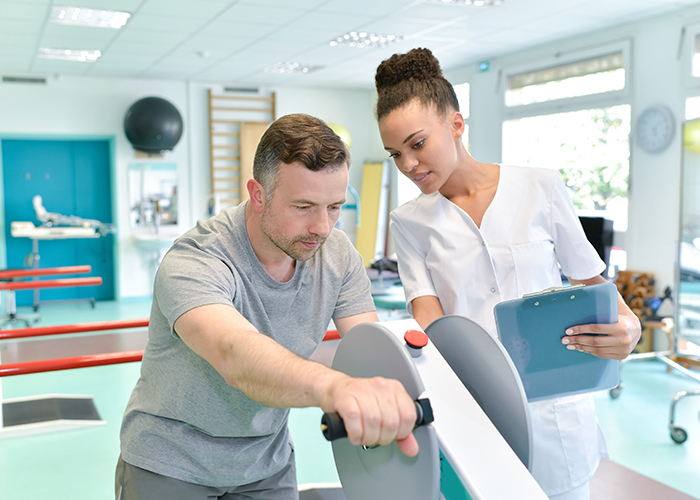
We will start with a post-surgical evaluation that includes checking your wound to ensure no infection has formed. Your therapist will also ask a series of questions to determine your current status and your individual goals.
Our physical therapists are movement experts and will help improve your quality of life through hands-on care, patient education, and prescribed exercises. We use the information gathered in the initial evaluation to develop a comprehensive program that includes targeted manual techniques, mobility work, strengthening, and any appropriate pain relief technique.
Rehabilitation should start immediately following surgery to ensure the fastest recovery possible. Once you get your shoulders moving again, there are some exercises you can do on your own, and your physical therapist will provide clear instructions to ensure you have the best possible outcome!
Get Your Shoulders Moving Once Again!
If you have recently received a total shoulder replacement or need it in the future, contact us today. At Aspen Rehab, our physical therapists are highly trained to guide you through pre-hab and post-surgical physical therapy so you can regain your optimal shoulder function!
Patient
Success Story
“I had knee pain and was so sad and depressed I thought maybe I needed surgery. But I decided to have therapy. I chose Aspen Rehab for therapy and it was an amazing place. The people are so friendly and nice. My therapist was Vesna who is an amazing, wonderful, kind hearted, and honest person. She took care of my knee well. Because of her, I got my knee back. Now I can walk without knee sleeves. Thank you, Vesna. Thanks for everything. I miss you. Always keep up your good work. Frank is also a very good person. He was always patient with me when I made appointments. Thanks for everything.”
— Jasmin R.

The Role of Sports Physical Therapy
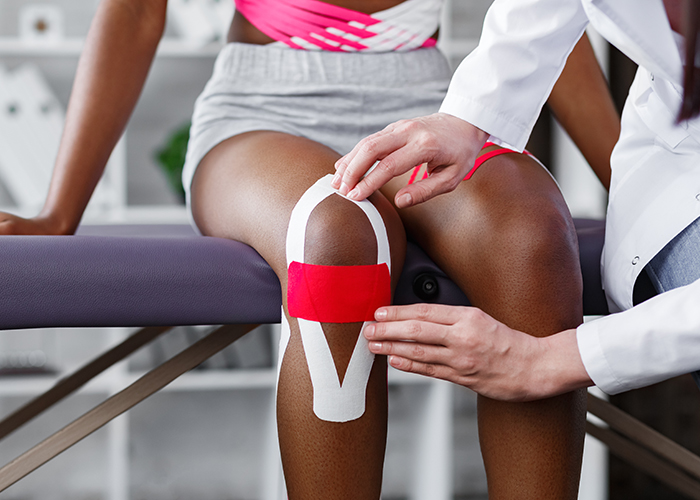
Athletes often push their bodies to the limit to achieve their goals. This intense effort, or an unfortunate accident, can sometimes lead to injuries. Fortunately, with the right information and approach, many of these injuries can be avoided or effectively managed through physical therapy.
Here, we explore the most common sports injuries and how physical therapy can be a pivotal player in preventing surgeries.
Common Sports Injuries
First, let’s discuss some of the most frequently encountered sports injuries. One of the main reasons for these injuries includes deceleration incidents, which put immense strain on muscles and ligaments, and sudden changes in direction, which can cause lower body sprains and strains.
In addition, inadequate or improper training methods, including insufficient warm-up and improper technique, elevate the risk of injuries. Overuse injuries (i.e., repetitive stress) frequently occur without proper rest, leading to complications such as tendonitis.
The top sports injuries are:
- Ankle Sprains: Ankle sprains are common in sports involving running and jumping when the ligaments surrounding the ankle are stretched or torn.
- Knee Injuries: Athletes are prone to knee injuries, which can involve damage to ligaments, cartilage, or other structures within the knee joint.
- Shoulder Injuries: These encompass a range of issues, including rotator cuff tears and dislocations, often seen in sports that involve overhead motions like swimming or baseball.
- Fractures: These involve breaks in the bones from a single, forceful incident or stress fractures (caused by repetitive stress).
Our physical therapists can guide you through preventive strategies to reduce your risk of sports injuries and promote a safer athletic environment.
Seek the Right Guidance
Physical therapy plays a significant role in helping athletes avoid surgeries and return to their optimal performance levels. Here’s how:
By working closely with our skilled physical therapists, athletes can return to their favorite sports and sidestep any potential surgeries!
Contact Aspen Rehab today
to schedule a consultation with
one of our sports therapists!
Cilantro Lime Chicken & Avocado Salsa

Ingredients
- 1.5 lb. boneless chicken breast
- 1/4 cup lime juice
- 2 tbsp olive oil
- 1/4 cup fresh cilantro
- 1/2 tsp ground cumin
- 1/4 tsp salt
For Avocado Salsa: - 4 avocados, diced
- 1/2 cup fresh cilantro
- 3 tbsp lime juice
- 1/2 tbsp red wine vinegar
- 1/2 tsp red pepper flakes
- 1 garlic clove, minced
Add 1/4 cup of lime juice, olive oil, 1/4 cup of fresh cilantro, ground cumin, and 1/4 tsp of salt to a small bowl. Whisk until mixed. Add chicken and marinade to a large ziplock bag. Let chicken marinate for at least 15 minutes. Preheat grill to medium-high heat (about 400°F). Place chicken on grill and grill each side for 4-6 min, until chicken is no longer pink. Remove and let sit. For avocado salsa: add avocado, 1/2 cup fresh cilantro, 3 tbsp lime juice, red wine vinegar, red pepper flakes, garlic clove, and salt to a small bowl. Gently toss to mix. Top the cilantro lime chicken with the avocado salsa and serve.
Exercise of the Month
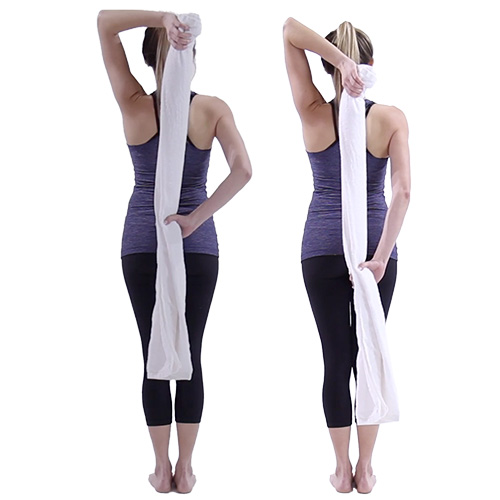
Shoulder External Rotation Stretch (Towel)
Start by standing up straight holding one end of a towel on the side you want to stretch. Sling the towel over your shoulder so that your elbow is above your head and your upper arm is by your ear. Grab the bottom end of the towel with your other hand and gently pull down and back allowing your working shoulder to rotate back slightly. Hold for 30 seconds and repeat.

Team Spotlight

Vesna Radivojevic
Physical Therapist Assistant